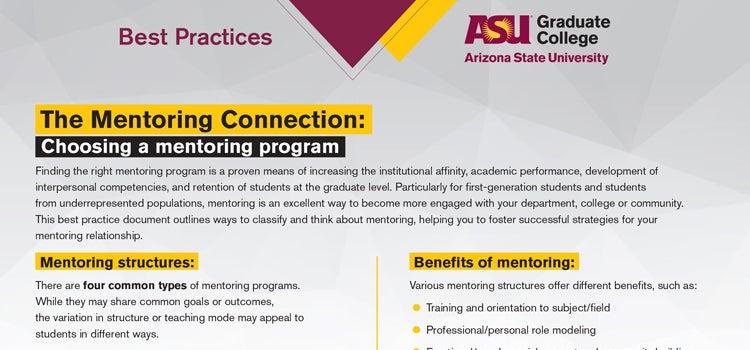
The Mentoring Connection: Choosing a mentoring program
Finding the right mentoring program is a proven means of increasing the institutional affinity, academic performance, development of interpersonal competencies, and retention of students at the graduate level. Particularly for first-generation students and students from underrepresented populations, mentoring is an excellent way to become more engaged with your department, college or community. This best practice document outlines ways to classify and think about mentoring, helping you to foster successful strategies for your mentoring relationship.
Read these tips for help choosing the right mentoring program.
More stories from the Graduate Insider

Grad15: Time Management for Graduate Students
Graduate school is an exciting and rewarding journey, but it can also feel overwhelming at times. Effective time management is one of the most valuable skills students can develop. By practicing these strategies now, graduate students not only set themselves up for success during their programs but also carry these habits into future professional and personal endeavors. Even individuals outside of academia can benefit from practical approaches to managing time.

Snacks, coffee and office hours at the Graduate College
The Graduate College has a space just for graduate students. Whether you need a quiet place to study, a mental breather between classes, or just a moment to sip some coffee and grab a snack, this space is for you. Here's what's on the agenda for the fall 2025 semster.
Format advising office hours
Mondays and Wednesdays, 2:00 – 4:00 p.m.
Room 288A

Sharing cultural experiences through storytelling
We often read stories to understand the perspectives of others, but how can stories be used as a tool to better understand ourselves? Rebecca Stuch pursued the Fulbright U.S. Student Program to support her dissertation research abroad in Moldova, where she investigated how Moldovan youth experience, interpret and negotiate their understanding of national identity in a post-Soviet context.