Distinguished award program advises ASU student applicants
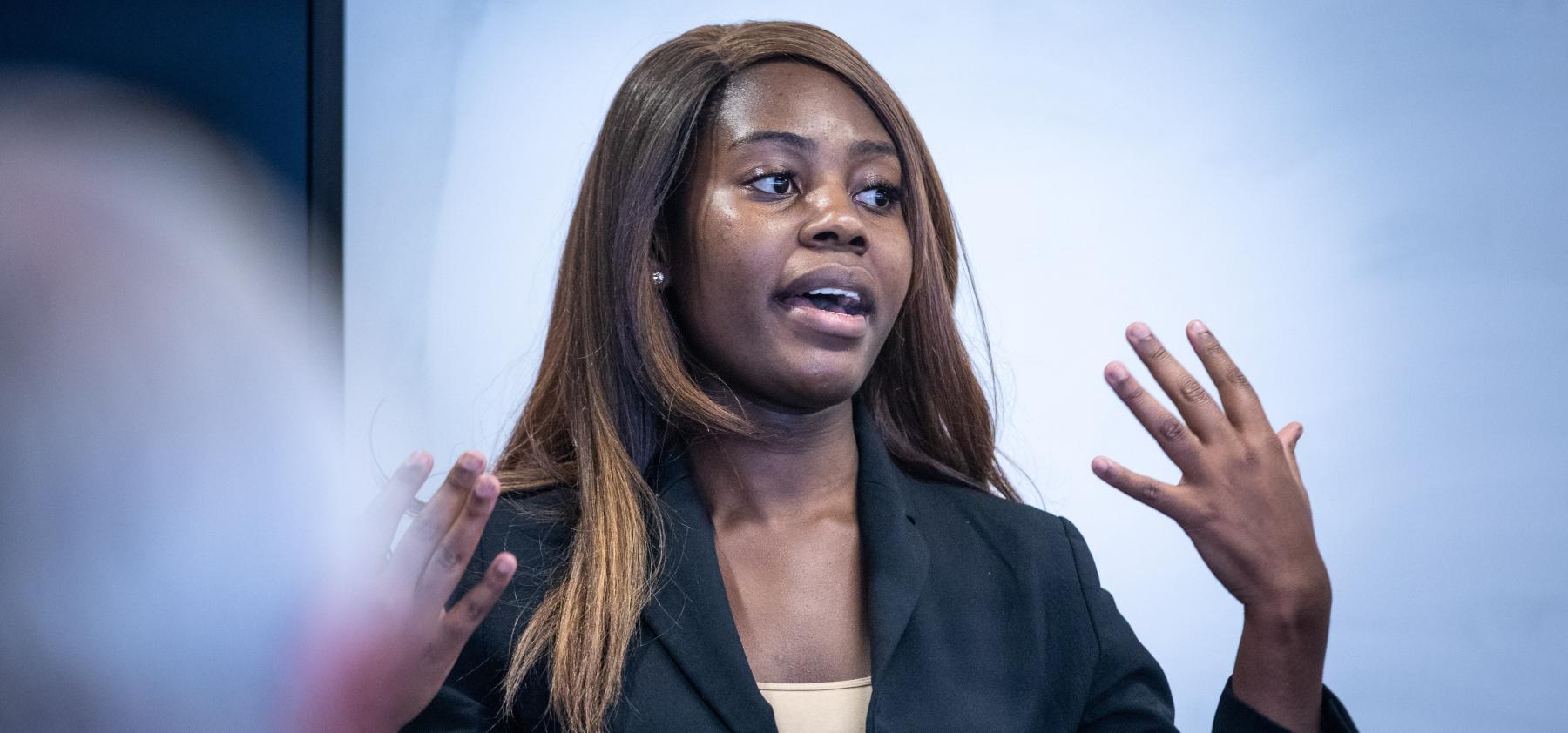
Arizona State University graduate student Shantel Marekera has been awarded the 2019 Rhodes Scholarship, making her one of the 32 young students from the United States who receive the award each year.
The Rhodes Scholarship, the oldest and perhaps most prestigious international scholarship program in the world is awarded for postgraduate study at the University of Oxford.
“Being named a Rhodes scholar was one of the life-changing moments I have experienced this far,” said Marekera. “I never expected it at all. Even though I had been named among the finalists who made it to the interviewing stage, I was still shocked when they named me as the only girl who had received the Rhodes for the Zimbabwean constituency.”
Marekera obtained her undergraduate degree from Ashesi University in Ghana, Africa and graduate degree from ASU within five years as part of the Ashesi partnership with ASU.
Marekera graduated summa cum laude from ASU’s Barrett, The Honors College and the School of Social Transformation with the College of Liberal Arts and Sciences. She recently finished her graduate degree in the School of Social Transformation’s Justice Studies MS program.
“I am passionate about advocacy, policy and international human rights with a special emphasis on women’s rights,” said Marekera.
In an effort to expand the program, the Rhodes Trust announced in early 2018 that the number of awards issued each year has increased. The program opened to students from all countries and more than 100 Rhodes Scholarships are now awarded, each year.
Joshua Brooks, the program manager for distinguished graduate awards and fellowships at the Graduate College, advises both postdoctoral researchers and graduate students applying for competitive scholarships and fellowships.
“I assisted with Shantel’s interview preparation along with Kyle Mox, Director of ONSA,” said Brooks. “It should be no surprise that she’s extraordinary — she’s a Rhodes Scholar, after all. But sometimes it takes professional, skilled preparation to be able to demonstrate positive character traits at will, in an interview, for example.
Graduate students who are interested can familiarize themselves with the fellowship options available through the Graduate College, then contact their academic unit for internal deadlines and processes.
“My office, along with our partners, like ONSA, help with that,” said Brooks. “We help with all forms of advising and application prep. Students should be on the look-out for communications from the Graduate College and their units to know what opportunities are upcoming.”
More stories from the Graduate Insider

Inside Graduate College’s Three Minute Thesis competition
When Aliyah Egan stepped onto the stage as a master’s student in last year’s Graduate College Three Minute Thesis (3MT) competition, she faced a challenge familiar to many researchers: explaining complex, specialized work to an audience with little or no background in her field.

Mentoring with intention: Strengthening graduate support at ASU
January is National Mentoring Month, a time to celebrate the impact mentoring can have and to reflect honestly on where gaps remain. At Arizona State University, mentoring is recognized as a critical component of graduate student success.

Graduate education is an adventure
About eighteen months ago, I set out on a journey walking the islands of the Dodecanese during a sailing trip in Türkiye and Greece with several friends. Along the way, I found winding paths, timeless villages and breathtaking views of sea and sky. That experience got me thinking about how adventure shows up in other parts of life, especially in learning.